Which of the Following Describes a Form of Active Transport
- a plant in a hypertonic solution wilts - carbon dioxide moves out of cells in the lungs to be exhaled. O Monosaccharides do not require a protein carrier for transport into the blood.
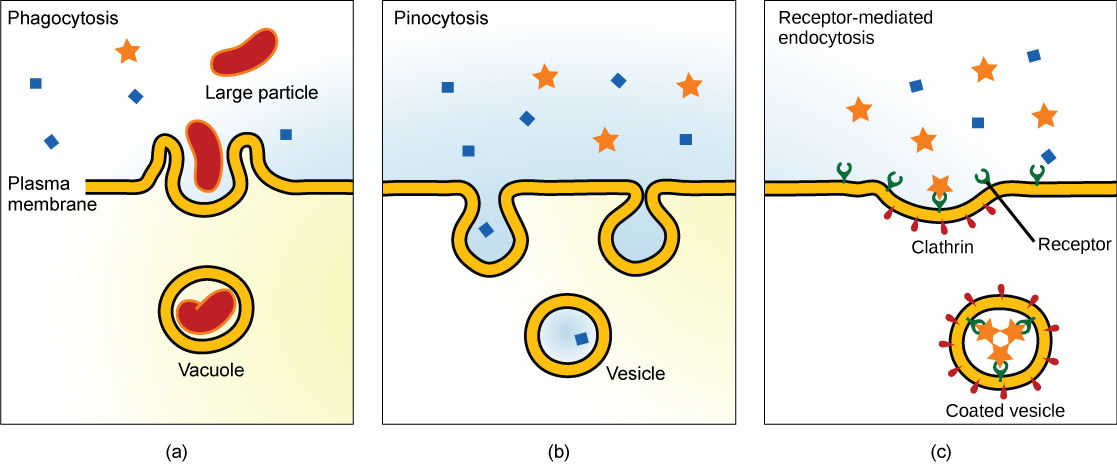
3 6 Active Transport Concepts Of Biology 1st Canadian Edition
It is a form of active transport in which particles move from an area of higher to lower concentration.
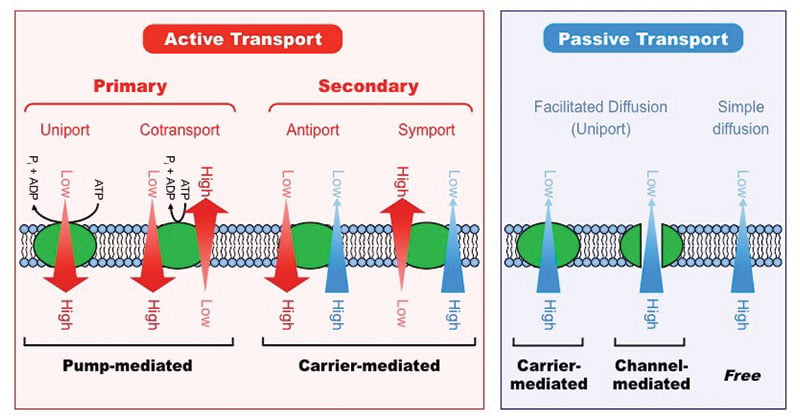
. Diffusion Osmosis Active Transport There are two ways in which substances can enter or leave a cell. It is a form of passive transport in which particles move from an area of higher to lower concentration. Uniporters symporters and antiporters.
This process is a form of active transport that moves three sodium ions to the outside of a cell for every two potassium ions that it moves into the cell. Which of these best explains why energy is needed for active transport. - ions move across a cell membrane through facilitated diffusion.
Active transport is the movement of molecules from a lower concentration to a higher concentration. The Sodium-Potassium pump Exocytosis and Endocytosis. The active transport mechanism transports glucose into the intestinal epithelia and Na into the intestinal lumen.
Some monosaccharides are absorbed via a form of passive transport namely facilitated diffusion. It is a form of passive transport in which water moves from an area of higher to lower concentration. What is active transport.
Which of the following describes movement of molecules into a cell though active transport. Molecules move through passages in the cell membrane that are created by channel proteins 3. Active transport is a rapid process.
Nutrients diffuse through the lipid molecules that form the bimolecular layers of the membrane. 1 Absorption of most nutrients from the intestine 2Rapid and selective absorption of nutrients by cells 3Maintaining a membrane potential and 4Maintaining water and ionic. This process is vital for living organisms and is important for the following reasons.
4Cells dispose of large. Which of the following processes is an example of active transport. Electrochemical gradients and secondary active transport.
Up to 256 cash back The active transport mechanism transports both glucose and Na into the intestinal epithelia. A type of active transport that moves substances including fluids and particles into a cell. How is the speed of the car between 1 to 2 hours.
Which one of the following BEST DESCRIBES ACTIVE TRANSPORT in procaryotes carrying out a respiratory catabolism. 1Osmosis is a form of passive transport. This is the currently selected item.
4 For number 29-30 study the graph below and answer the questions that follow d km 30 29. Active transport is the process of transferring substances into out of and between cells using energy. Sodium-Potassium Pump The Sodium-Potassium Pump is a structure known as a cell-membrane pump that uses energy to transport Sodium and Potassium ions in and out of the cell.
It takes place across a biological membrane where a transporter protein couples the movement of an electrochemical ion typically Na or H down its electrochemical gradient to the upward movement of another molecule or an ion against a concentration or. Which of the following is an example of active transport. Secondary active transport is a kind of active transport that uses electrochemical energy.
In some cases the movement of substances can be accomplished by passive transport which uses no energy. Active transportation is influenced by temperature. All monosaccharides require energy for absorption.
Nutrients gain entrance into the cell through hollow pili. Transpires in one direction. In active transport carrier proteins are required.
Oxygen transfers into red blood cells through small gaps in the cell membrane from oxygen-rich environment surround the cells. 2Endocytosis and exocytosis are forms of active transport. 3What does it mean for an environment to be isotonic.
1Osmosis is a form of passive transport. Which of the following describes a form of active transport. Active transport always uses some form of energy to push substances up their concentration gradient.
Passive transport is a comparatively slow process. The most common source of energy for active transport is ATP or Adenosine Tri-Phosphate. In these cases active transport is required.
1 Passive a Simple Diffusion b Facilitated Diffusion c Osmosis water only 2 Active a Molecules b Particles Diffusion Diffusion is the net passive movement of particles atoms ions or. The method of transporting material that requires energy. Up to 24 cash back There are three main types of Active Transport.
The cellular process known as the sodium-potassium pump was discovered in the 1950s by Jens Christian Skou a Danish scientist. The passive transport mechanism transports glucose into the intestinal epithelia and Na into the intestinal lumen. Hydrocarbons dissolve in the lipid bilayer and travel down a concentration gradient 2.
All monosaccharides are absorbed via facilitated diffusion Which of the following statements. Therefore they require active transport. Which graph describes that the object is at rest.
It is a form of passive transport in which particles pass. A oxygen diffusing across the cell membrane B glucose entering a cell by using channel protein C water leaving a cell by osmosis D a cell consuming a bacteria cell phagocytosis. - a cell moves glucose into the cell by using some of the cells energy.
Passive transportation is not influenced by temperature. Energy driven by proton gradient formed by electron transport. However the cell often needs to transport materials against their concentration gradient.
A gradient produced by the combined forces of the electrical gradient and the chemical gradient. 2Endocytosis and exocytosis are forms of active transport. Active transport because membrane proteins were used.

Active And Passive Transport Difference And Comparison Diffen
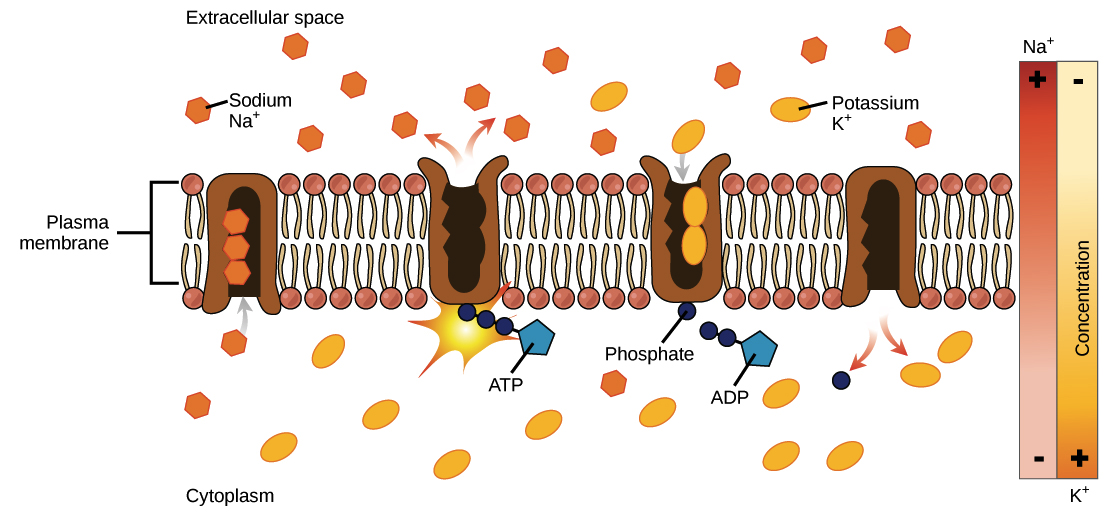
Active Transport Review Article Khan Academy
Active Vs Passive Transport Definition 18 Differences Examples
No comments for "Which of the Following Describes a Form of Active Transport"
Post a Comment